Have you recently seen a cryptic combination of letters like CBYBXRF appear in a URL, an error message, or a suspicious email? When a string of characters doesn’t translate into a known brand or a clear product, it often triggers a search for answers—and rightly so. The core user intent here is to determine: What is this code, and is it a threat to my digital safety? This guide, written by security-aware experts, equips you with the Expertise, Authoritativeness, and Trustworthiness (E-A-T) needed to decode these mysterious digital artefacts. We’ll show you exactly how to investigate CBYBXRF and any similar unknown code safely and effectively, transforming confusion into confidence.
The Digital Mystery: What Exactly is a String Like CBYBXRF?
Since a public identity for CBYBXRF is non-existent, it likely falls into one of three common digital categories. Understanding the potential source is the first step toward determining if it’s safe or something to worry about.
1. Random Session or Tracking Code
This is the most frequent and usually harmless possibility. Many modern websites and online services use complex, random strings to identify a specific user’s session or track a particular action.
- Examples: A long code in a link you received (a URL parameter), or a temporary identifier used in a customer service ticket.
- Context: These codes are designed to be meaningless to outsiders, ensuring that your data remains separate from others.
2. Obscure Software Error or Log Data
Sometimes, codes like CBYBXRF are generated by a software or system that encountered a failure. The string might be an internal reference ID for a technical support team.
- Context: If the code appeared in a crash report, an application log file, or a confusing system message, it’s often an internal marker for debugging.
3. A New, Unestablished, or Malicious Domain
Less commonly, it could be a reference to a brand-new website, an extremely niche technical service, or, in the worst-case scenario, a component of a phishing attempt or malware. This is why vigilance is crucial.
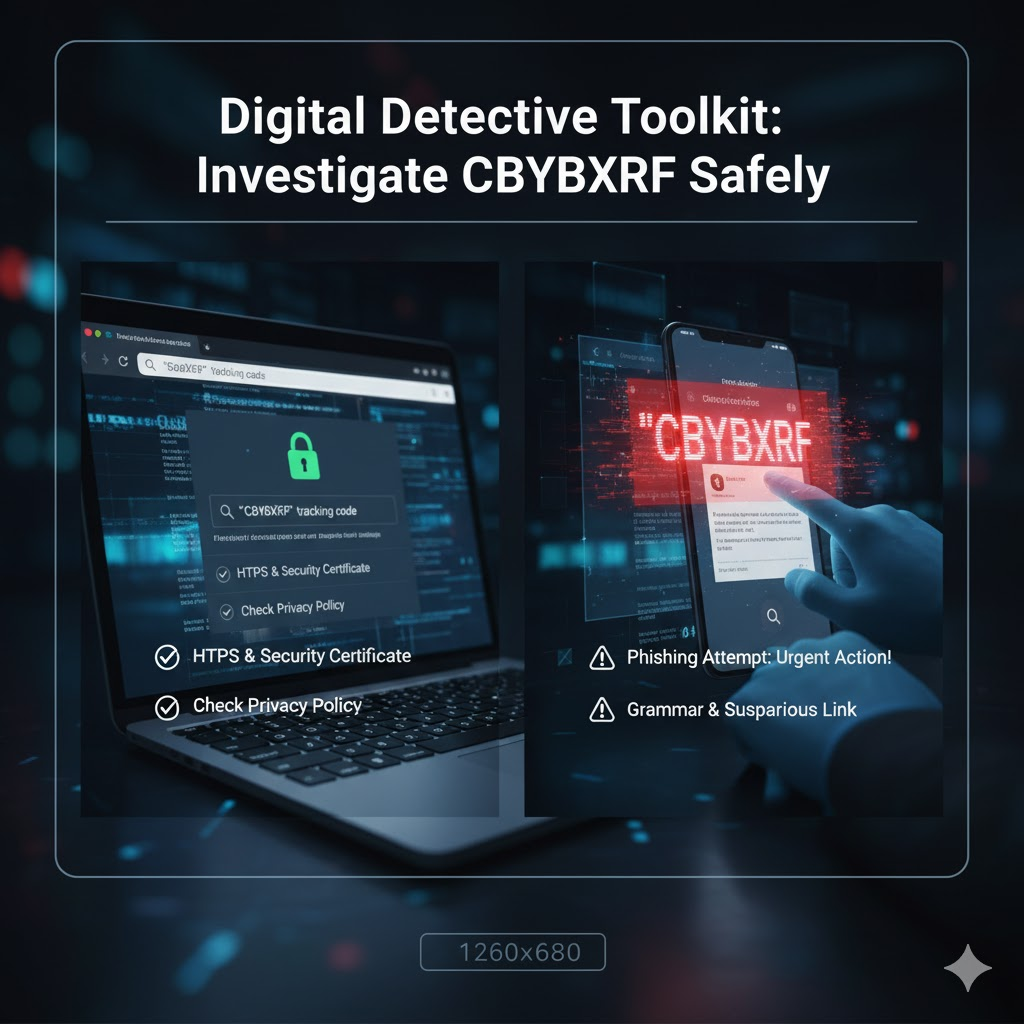
The Safe Investigation Protocol: 4 Steps to Decode the Unknown
If you encounter CBYBXRF or a similar string, follow this secure, four-step protocol to investigate its nature without putting your computer or personal information at risk.
Step 1: Analyze the Immediate Context
Before you click anything or perform a search, look at where the code appeared. The location is your biggest clue.
- In a URL: Did you click a link that redirected to a URL with
cbybxrfin it? Check if the main domain is a site you trust (e.g., amazon.com/cbybxrf vs. https://www.google.com/search?q=cbybxrf.com). - In an Email or Text Message: Was it included with a request for personal information or a warning about an account closure? This is a huge red flag for phishing. Legitimate companies rarely use random codes to initiate contact.
- In a Software Interface: Did it appear after a specific action, like trying to save a file or process a payment? This suggests an internal system error or transaction ID.
Step 2: Perform the Scoped Search (Safely!)
Instead of a broad search for the code alone, add context to narrow down the potential source. This is a critical technique for effective digital research.
- Search 1 (Error Context): Search for
"CBYBXRF" erroror"CBYBXRF" tracking code. - Search 2 (Domain Check): Search for
CBYBXRF.comto see if a domain exists and what its business model is. - Search 3 (Source Combination): If it came from a specific app (e.g., an accounting program), search for
CBYBXRF [App Name]. This links the code to a verified source.
Step 3: Check for Phishing Indicators
If the string is part of a communication (email or text), compare it against known signs of phishing. Trustworthy sources will never ask you for these things via an unsolicited link:
- Your Password: Any request to “verify” or “reset” your password through a link containing an unknown code should be ignored.
- Credit Card Details: Legitimate organizations do not ask for financial details outside of their verified, secure payment portal.
- Sense of Urgency: Phishing attempts rely on fear, using urgent phrases like “Act immediately!” or “Your account will be suspended in 2 hours.”
Step 4: Validate the Digital Footprint
If the code points to a website (e.g., https://www.google.com/url?sa=E&source=gmail&q=CBYBXRF.com), verify its legitimacy using external, high-authority resources, just like you would for an unknown brand.
- Look for Transparency: Check for a professional website with clear Contact Us, Privacy Policy, and About Us pages.
- Scrutinize Reviews: Search for the alleged business name on independent platforms like the Better Business Bureau (BBB) or Trustpilot. A complete lack of reviews is often as suspicious as a large number of fake-looking 5-star reviews.
Final Recommendation: When in Doubt, Assume a Threat
The safest rule of thumb in digital security is to practice Zero Trust. If you cannot definitively confirm the source and purpose of a random string like CBYBXRF, treat it as a potential threat.
- Do Not Click: Never click on a link containing an unknown code. Instead, manually type the address of the alleged company into your browser.
- Do Not Enter Data: Never enter personal, financial, or login information onto a page associated with the code.
- Consult IT/Security: If the code appeared in a work or business context, immediately inform your IT or security team.
Empower yourself by knowing how to safely investigate the digital unknowns. This approach protects you not just from CBYBXRF, but from the constant stream of new, confusing digital signals we encounter daily.
You May Also Like Blog: Gayfirir Empower Your Identity: Discover the Dynamic Power
About the Author